City of Panaji
Assessment under Climate Smart Cities Assessment Framework 2.0
Assessment under Climate Smart Cities Assessment Framework 2.0
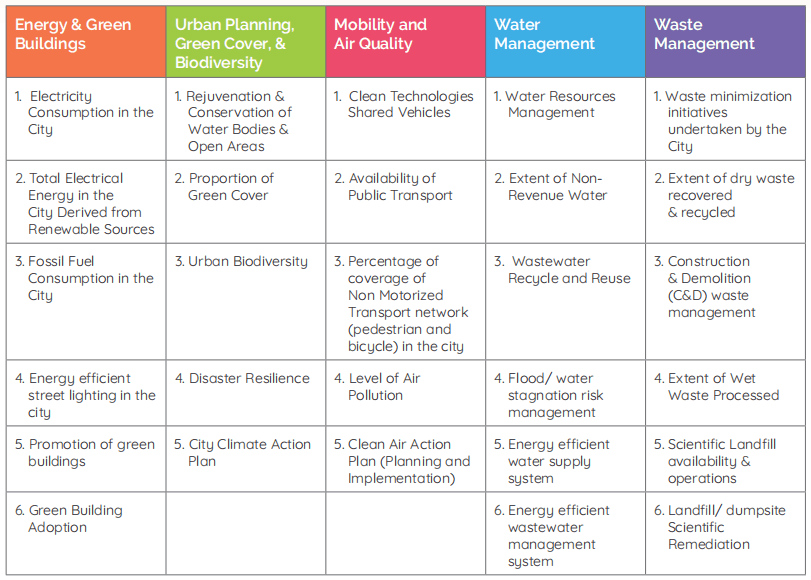
The Government of India has eight missions under the National Action Plan on Climate Change (NAPCC) to address the impact of climate change. The National Mission on Sustainable Habitat is one of the eight climate missions and aligning to the National Mission on Sustainable Habitat, the Smart Cities Mission under the Ministry of Housing and Urban Affairs (MoHUA) launched “ClimateSmart Cities Assessment Framework” in February 2019. This framework was first-of-its-kind city assessment framework on climate relevant parameters, including those of the recently launched National Clean Air Programme. The “ClimateSmart Cities Assessment Framework” serves as a tool for cities to assess their present situation and provides a roadmap for cities to adopt and implement relevant climate actions. In addition, the dissemination of best practices adopted by Indian cities has supported in setting contextual standards in green, sustainable and resilient urban development.
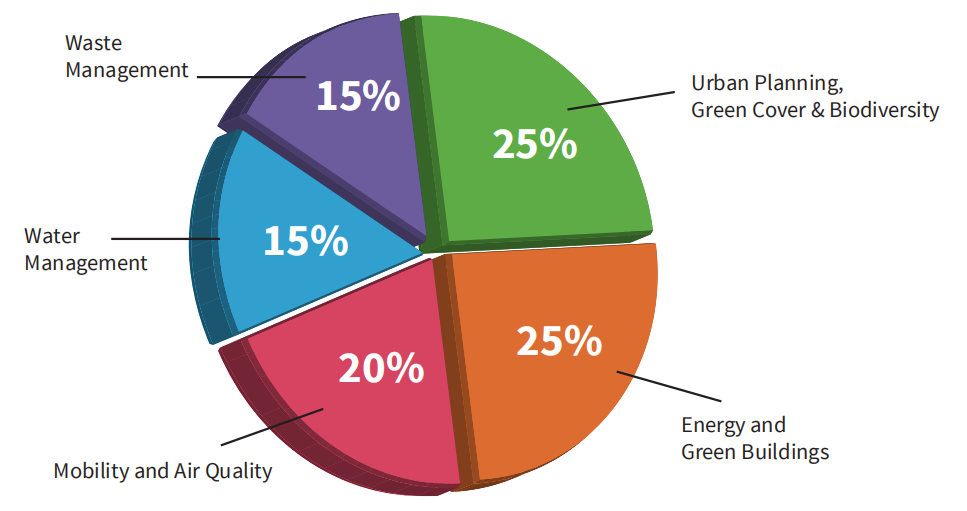
The framework is broadly categorised into 5 sectors with 28 indicators. Each of these indicators have a maximum of 5 levels representing different stage of development each with a corresponding weightage. The indicators formulated are progressive and aspirational in nature from Level 1 to Level 5. Each indicator not only assess but also provides guidance to progress and achieve the next highest levels.
The settlement area was historically established around 1759 A.D.
It covers an area of approximately 1,32,292 square metres.
(Source: Revised City Development Plan for Panaji 2041; pg 1,28-29 )
Current population is 2150 persons.
Number of households are 513.
Water supply connection coverage is 100%.
Water supply service hours per day is approximately 4 hours.
Number of community toilets present in the ward is 1.
(Source: Final CSP Panaji; pg 30,39,47 )
Solid waste management Zone under CSM Plan is 5(part).
(Source: Draft Panaji Smart City Proposal Fast Track Round; pg 15 )
There are no sewage treatment plant located within the ward.
Sample yearly power consumption is 2496 units per building.
(Source: Survey)
The settlement area was historically established around 1759 A.D.
It covers an area of approximately 1,64,825 square metres.
(Source: Revised City Development Plan for Panaji 2041; pg 1,28-29 )
Current population is 1360 persons.
Number of households are 309
Water supply connection coverage is 100%.
Water supply service hours per day is approximately 4 hours.
Number of community toilets present in the ward is 2.
(Source: Final CSP Panaji; pg 30,39,47 )
Solid waste management Zone under CSM Plan is 5(part).
(Source: Draft Panaji Smart City Proposal Fast Track Round; pg 15 )
There are no sewage treatment plant located within the ward.
Sample yearly power consumption is 2496 units per building.
(Source: Survey)
The settlement area was historically established around 1983 A.D.
It covers an area of approximately 4,17,322 square metres.
(Source: Revised City Development Plan for Panaji 2041; pg 1,28-29)
Current population is 1223 persons which includes Ribander.
Number of households are 296 which includes Ribander.
Water supply connection coverage is 100%.
Water supply service hours per day is approximately 5 hours.
Number of community toilets present in the ward is 1.
(Source: Final CSP Panaji; pg 30,39,47 )
Solid waste management Zone under CSM Plan is 9.
(Source: Draft Panaji Smart City Proposal Fast Track Round; pg 15 )
Number of sewage treatment plant located within the ward is 1.
Sample yearly power consumption is 14,952 units per building.
(Source: Survey)
The settlement area was historically established around 1781 A.D.
It covers an area of approximately 81,20,000 square metres.
(Source: Revised City Development Plan for Panaji 2041; pg 1,28-29)
Current population is 1,00,012 persons.
Number of households are 10,158.
Water supply connection coverage is 100%.
Water supply service hours per day range between 1 to 7 hours.
Number of community toilets present in the city is 11.
(Source: Final CSP Panaji; pg 30,39,47 )
Average yearly power consumption is 2030 KWHr per customer.
(Source: GED Report FY 2018-19; pg 4-7)
Number of sewage treatment plant located within the city is 2.
(Source: Survey)
of Ward 19, 20 & 28(Patto) for following two Indicator Groups:

Created with
Mobirise